
Table of Contents:
- Introduction to Equestrian Jumping
- Essential Jumping Equipment
- Training Tips for Jumping Success
- Understanding Jump Techniques
- Maintaining Equipment for Longevity
- The Role of Jump Cups in Equestrian Training
- Conclusion: Striding Towards Mastery
Introduction to Equestrian Jumping
Equestrian jumping, a captivating and demanding discipline within horse riding sports, combines agility, speed, and timing. Jumping tests the skill of both rider and horse and their teamwork and understanding. Knowing the importance of every little detail can make a difference in performance for anyone entering or already part of this exhilarating arena. An often overlooked but essential component in this is the selection of the best horse jump cups. Jump cups may seem minor, but they are crucial for ensuring the safety and stability of jumps. Utilizing the correct jump cups can dramatically impact safety and training outcomes, making them indispensable to the jumping environment.
This guide provides a comprehensive overview of equestrian jumping essentials, from the indispensable equipment required to the subtleties of mastering jump techniques. Each aspect of equestrian jumping is pivotal in fostering a harmonious and effective training experience for both horse and rider. Individuals can elevate their skills with proper guidance, leading to more enjoyable and successful sports participation.
Essential Jumping Equipment
To excel in equestrian jumping, outfitting the rider and the horse with proper gear is vital. The foundation of any successful riding session lies in a well-fitted saddle that offers both comfort and security. An ill-fitted saddle can cause discomfort and distraction to the horse, negatively affecting its performance. Complementing this is choosing the right stirrups and boots for optimal foot placement, contributing to maintaining balance during jumps. Furthermore, helmets are non-negotiable safety gear; they protect the rider from potential head injuries and are mandatory in most competitive and casual riding environments.
Aside from these, investing in high-quality riding attire made of breathable materials ensures the rider remains comfortable and focused on executing jumps. Tack and harness systems should also be prioritized, as they establish control and communication between horse and rider. Ultimately, each piece of equipment is crucial in ensuring safety and enhancing performance, making their selection a matter of expertise and personal preference.
Training Tips for Jumping Success
Training for equestrian jumping is not merely about repetition but involves a thought-out strategy that fosters gradual skill development. Consistency in practice is paramount, but so is the incorporation of diverse exercises that target specific skills. Riders can significantly benefit from ground pole work, which helps improve balance and coordination without taxing the horse with repetitive jumping. Incorporating grid work—sequences of small jumps placed at specific distances—can assist in polishing rhythm and stride length.
Seasoned trainers often emphasize the importance of developing trusting partnerships between horses and riders, which can be achieved through positive reinforcement and careful attention to the horse’s needs and responses during training sessions. Such methodology lends itself to creating a more responsive and willing horse capable of confidently tackling jumping challenges.
Understanding Jump Techniques
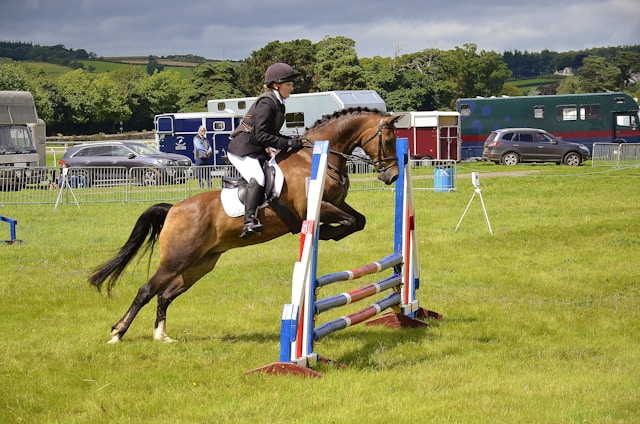
The correct jump technique can greatly enhance the fluidity and efficiency of jumps. It starts with perfecting the forward seat posture, a balanced position in which the rider is slightly ahead of the vertical when approaching the jump. This posture helps the rider absorb the horse’s movement during takeoff, offering better balance and connection.
Additionally, mastering the crest release technique—where the rider allows the horse more freedom by releasing the reins forward during the jump—enables the horse to stretch and clear the leap comfortably. Being familiar with these techniques not only aids in executing more effective jumps but also instills a level of finesse that can set apart good riders from great ones. Such skills are honed through consistent practice and understanding the horse’s unique jumping style.
Maintaining Equipment for Longevity
Proper maintenance of jumping equipment ensures that it remains safe and durable over time. Leather gear, such as saddles and bridles, requires regular cleaning and conditioning to prevent drying and cracking. Neoprene or synthetic materials also benefit from routine cleansing to avoid mildew growth and prolong their life.
Equipment needs to be regularly inspected and cleaned. Check all stitching, buckles, and other fastening components for wear. Replace worn-out parts promptly to ensure safety during jumps. Proper storage, away from excessive heat or moisture, also helps maintain the equipment’s integrity over long periods, providing reliable performance when needed.
The Role of Jump Cups in Equestrian Training
The jump cup is a critical, albeit often underestimated, component of equestrian jumping. Jump cups hold the poles in place and facilitate adjusting the jump height. Selecting the right jump cups aids in training horses to tackle jumps of varying difficulty levels without risking injury. Suitable jump cups are sturdy, adjustable, and designed to release the pole quickly to prevent snagging during jumps.
Their role extends to ensuring the horse’s safety, the jump’s stability, and the overall effectiveness of training sessions. Tailoring jump cup selection according to training requirements and horses’ capabilities ensures a supportive environment conducive to learning and progress.
Conclusion: Striding Towards Mastery
The path to excellence in equestrian jumping is paved with dedication, practice, and an appreciation for every detail. From equipping oneself with the right gear to engaging in strategic training processes and advanced technique learning, the endeavor is both challenging and rewarding. This guide serves as a foundation for understanding the sport’s intricacies, offering a pathway for continual improvement.